Comparison
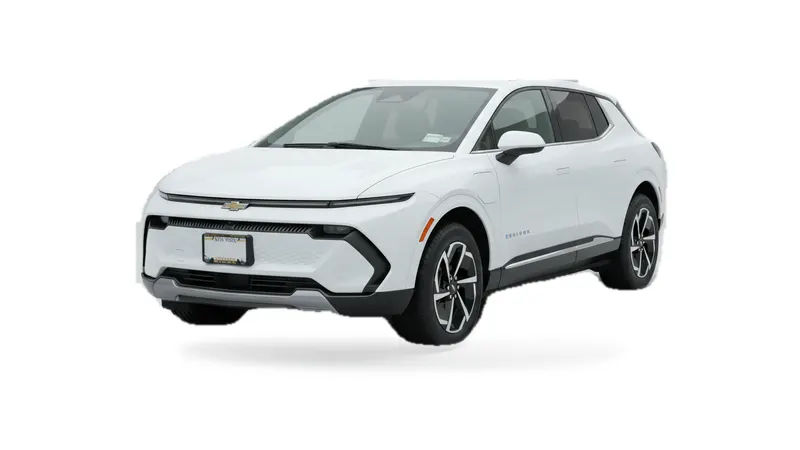
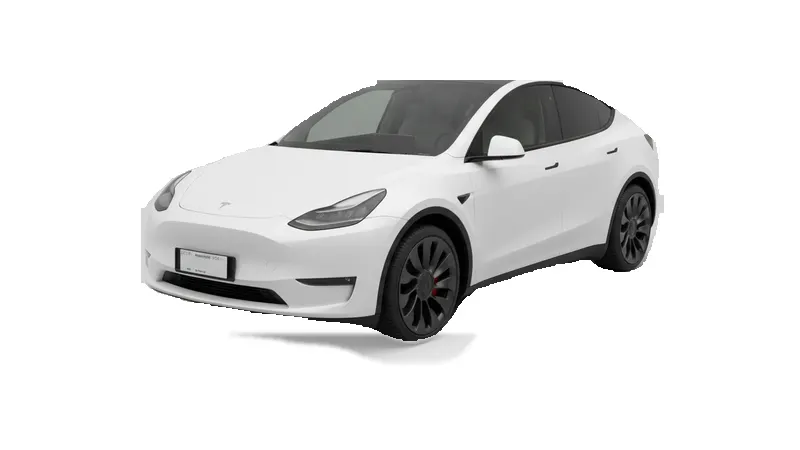
Chevrolet Equinox EV vs Tesla Model Y
FWD vs Premium RWD: range, price, charging, running costs and road-trip stops.
Winner by category
6 categories comparedBuying verdict
Editorial notesThe Equinox EV starts at $34,995, which is $10,995 under the Model Y Long Range RWD at $45,990. The Model Y buys 38 more miles of range (357 vs 319), a 250 kW peak charge rate and a NACS port.
Chevrolet Equinox EV is best for
- Shoppers capped near $35,000 who still want 319 miles of rated range.
- Buyers who want AWD under $41,000, since the Equinox EV AWD is $40,295 at 307 miles.
- Drivers who mostly charge at home and rarely need more than the 38-minute 10-80% stop.
Tesla Model Y is best for
- Frequent road-trippers who want NACS and 250 kW, with a 33-minute 10-80% stop.
- Families who need the extra cargo room, 30 cu ft against 26.
- Anyone towing a small trailer, with 3,527 lb rated against 1,499 lb.
The price gap is large enough to pay for a lot of charging time. The Equinox EV loses only 5 minutes on the 10-80% stop, but its 150 kW peak is well below the Model Y at 250 kW, and its CCS1 port means Tesla Superchargers depend on an adapter. If most of your miles are daily commuting, the Chevrolet covers the same job for much less money.
Side-by-side comparison
Featured trims| Spec | Chevrolet Equinox EV | Tesla Model Y |
|---|---|---|
| Trim used | FWD | Premium RWD |
| MSRP (USD) | $34,995 (better) | $45,990 |
| Range | 319 mi | 357 mi (better) |
| Efficiency | 311 Wh/mi • 3.22 mi/kWh | 250 Wh/mi • 4 mi/kWh (better) |
| Battery (usable) | 85 kWh (better) | 79 kWh |
| Seats | 5 | 5 |
| Drivetrain | FWD | RWD |
| Body type | SUV | SUV |
| DC max | 150 kW | 250 kW (better) |
| AC max | 12 kW (better) | 11 kW |
| 10–80% (DC) | 38 min | 33 min (better) |
| Roadtrip score | 66.3 | 82 (better) |
| Miles added (15 min est.) | 76 mi | 101 mi (better) |
| USD per mile of range | 110 $/mi (better) | 129 $/mi |
| 0–60 mph | 7.7 s | 5.4 s (better) |
| Top speed | 118 mph | 125 mph (better) |
| Cargo | 26 cu ft | 30 cu ft (better) |
| Tow rating | 1,499 lb | 3,527 lb (better) |
Pick the Chevrolet Equinox EV if…
- You want the lower price: $34,995 vs $45,990 to start, $10,995 less.
Pick the Tesla Model Y if…
- You drive long days: 357 vs 319 miles of rated range.
- You want lower running costs: about $3,850 vs $4,800 in energy over 5 years.
- You tow: rated for 3,527 lb vs 1,499 lb.
- You care about acceleration: 0-60 mph in 5.4 vs 7.7 seconds.
- You want to use Tesla Superchargers without an adapter: it has a native NACS port.
5-year energy cost: Chevrolet Equinox EV vs Tesla Model Y
| Charging mix | Chevrolet Equinox EV | Tesla Model Y |
|---|---|---|
| Efficiency | 311 Wh/mi | 250 Wh/mi |
| All home charging | $3,500 | $2,850 |
| 80% home, 20% public DC | $4,800 | $3,850 |
| All public DC fast charging | $9,950 | $8,000 |
60,000 miles (12,000 a year) at rated efficiency, $0.17/kWh at home, $0.48/kWh at public fast chargers, plus 10% charging loss. A 30 mpg gas car at $3.20/gal would spend about $6,400 on fuel over the same miles. Use your own rates.
500-mile road trip: charging stops
| Chevrolet Equinox EV | Tesla Model Y | |
|---|---|---|
| First leg (90% to 10%) | 217 mi | 243 mi |
| Each leg after a 10-80% stop | 190 mi | 212 mi |
| Fast-charge stops | 2 | 2 |
| Time spent charging | about 75 min | about 65 min |
| DC port | CCS1 | NACS |
Highway range taken as 85% of rated range. Each stop is counted as a full 10-80% session at the listed time, so the last stop is often shorter in practice. Cold weather and high speeds add stops. Charging time calculator.